A Guide to Choosing mudjacking alternative Des Moines for Concrete Stability
The Science Behind Concrete Progressing: Discovering Mudjacking Alternatives and Polyfoam Solutions
Concrete leveling is a necessary procedure for preserving structural stability in numerous setups. Recognizing the root causes of concrete negotiation is important in identifying the ideal remedy. Standard techniques like mudjacking offer some advantages however come with considerable limitations. Additionally, newer polyfoam options present cutting-edge advantages. The performance of these techniques, along with their ecological effects and price effects, elevates important questions concerning the future of concrete stabilization. What approach will ultimately verify most reliable?
Comprehending Concrete Settlement and Its Causes
While concrete is a sturdy product, it is not unsusceptible to settling with time, which can cause numerous structural concerns. Negotiation occurs when the ground below concrete shifts or compresses, commonly as a result of changes in moisture degrees, dirt disintegration, or insufficient compaction throughout the preliminary installation. Variations in temperature level can also see more add, as concrete expands and contracts, possibly worsening existing weaknesses.
Additionally, heavy loads or inadequate drain can create localized sinking, creating unequal surfaces that may pose safety threats. In many cases, tree origins or neighboring building can interfere with the soil stability, causing more negotiation problems. Acknowledging the indicators of concrete negotiation, such as splits or disproportion, is necessary for timely intervention. Recognizing these reasons enables homeowner to take safety nets, ensuring the durability and stability of their concrete frameworks while preventing pricey repairs down the line.
Standard Mudjacking: Process and Limitations
Standard mudjacking is an extensively used method for increasing sunken concrete slabs by injecting a mix of concrete and various other materials below the surface. Nevertheless, this method comes with its own set of limitations, consisting of possible long-term performance and environmental factors to consider. Furthermore, cost aspects play a considerable function in determining whether mudjacking is the most viable service for concrete leveling needs.
Mudjacking Refine Review
Common Limitations Recognized
Lots of house owners might neglect the constraints connected with mudjacking as a concrete progressing option. While reliable in some cases, this technique has intrinsic downsides. One significant constraint is the possibility for soil erosion underneath the piece, which can cause future settling problems. Furthermore, mudjacking includes the injection of a hefty slurry, which might not appropriate for all soil types, especially expansive clay. The process can additionally be time-consuming, requiring significant cleanup and drying out time. In addition, mudjacking does not deal with underlying problems such as drain problems or dirt instability, which may demand additional repair work. As a result, property owners must thoroughly examine these limitations to identify if mudjacking is one of the most appropriate option for their concrete leveling needs.
Expense Considerations Clarified
While examining concrete progressing choices, house owners need to take into consideration the price implications linked with traditional mudjacking. This procedure typically varies from $300 to $1,500, depending upon the extent of the damage and the location requiring treatment. It is often viewed as an economical service compared to complete slab replacement, mudjacking has constraints that can impact long-term worth. The requirement for additional repair services, such as patching or sealing, can enhance total expenditures. Additionally, the capacity for dirt disintegration or negotiation might require future treatments, better blowing up costs. Property owners must consider these variables versus alternate methods, such as polyfoam services, which might supply boosted sturdiness and minimized long-term maintenance costs, making them a more economically sound financial investment over time.
Polyfoam Solutions: Just How They Work
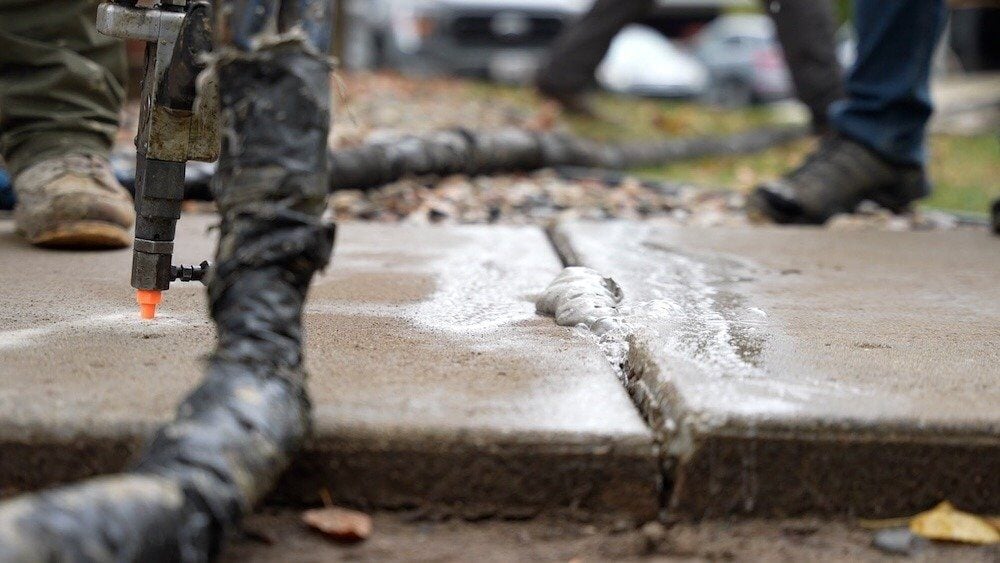
Polyfoam options have become a popular technique for concrete progressing, providing a lightweight and reliable option to standard techniques. When infused underneath a worked out concrete slab, this technique utilizes a particularly developed foam that sets and broadens. The process starts with drilling small openings right into the affected concrete, allowing gain access to for the foam.
As soon as infused, the foam expands to load spaces and lift the slab back to its original placement. The product's light-weight nature minimizes additional anxiety on the underlying soil, making it ideal for different applications, including commercial and residential buildings.
Furthermore, polyfoam is resistant to moisture and does not break down in time, ensuring resilient results. mudjacking vs polyjacking. Its fast healing time permits rapid completion of jobs, reducing downtime. Consequently, polyfoam solutions supply an efficient, long lasting, and eco-friendly alternative for concrete progressing, appealing to both specialists and property proprietors
Comparing Efficiency: Mudjacking vs. Polyfoam
When assessing concrete progressing approaches, it is important to contrast mudjacking and polyfoam solutions to figure out which is much more effective for specific scenarios. Mudjacking involves injecting a cement-based slurry underneath the concrete slab, supplying strong support. This method is typically favored for its cost-effectiveness and capacity to deal with larger tons. It may take longer to treat, and the weight of the product can occasionally lead to additional settling. (BAM Basements)
Conversely, polyfoam solutions use lightweight polyurethane foam that expands to fill up spaces and lift the piece. This strategy offers quicker treating times and marginal interruption to the surrounding location. In addition, polyfoam is much less likely to add to future settling due to its light-weight nature. Inevitably, the option in between mudjacking and polyfoam depends on variables such as the particular problems of the website, preferred rate of application, and tons requirements, making it crucial to analyze each approach's advantages and limitations.
Environmental Effect of Concrete Progressing Methods
The environmental influence of concrete progressing techniques is increasingly essential in today's building landscape. This discussion will certainly discover eco-friendly material alternatives readily available in the sector and contrast the carbon footprints of various techniques, consisting of mudjacking and polyfoam. Comprehending these elements is necessary for making notified choices that straighten with sustainability goals.
Eco-Friendly Product Options
Although concrete leveling is important for maintaining risk-free and functional surface areas, its ecological impact can be substantial. Typical methods often involve products that add to air pollution and resource depletion. However, environmentally friendly alternatives are emerging. Biopolymer-based foams, derived from eco-friendly resources, provide a sustainable choice that decreases environmental injury. Furthermore, recycled products can be integrated right into leveling substances, lowering waste and preserving natural resources. These environment-friendly options not just resolve the environmental worries associated with concrete progressing yet also give effective efficiency. By deciding for these ingenious products, service providers and building proprietors can add to a greener future, ensuring that essential fixings do not come with the expense of the setting.
Carbon Footprint Contrast
A significant aspect of reviewing concrete leveling methods is their respective carbon footprints, which can differ commonly depending on the products and methods made use of. Typical mudjacking, which utilizes a cement-based slurry, often results in higher carbon discharges as a result of the manufacturing and transport of cement. On the other hand, polyfoam options, commonly made from polyurethane, normally discharge less greenhouse gases throughout manufacturing and application. In addition, the lightweight nature of polyfoam minimizes transport emissions. Improvements in environmentally friendly materials and methods aim to reduce ecological influence, with some choices using recycled elements. Generally, comparing the carbon footprints of these approaches highlights the significance of selecting lasting options in concrete progressing methods, adding to a much more environmentally responsible building and construction sector.
Cost-Effectiveness: Assessing Long-Term Savings
While lots of house owners may originally think twice to spend in concrete leveling remedies, the lasting cost savings usually exceed the in advance expenses. Concrete settling can result in major structural concerns, requiring expensive repairs that much exceed the rate of leveling solutions. By addressing uneven surfaces early, homeowners can prevent additional damages to their buildings, including fractured foundations and water breach.

Furthermore, improved visual appeals and safety and security from trip risks can boost residential property worth and charm, making concrete leveling an economically sound option. Inevitably, the investment in concrete leveling solutions functions as an aggressive procedure, guaranteeing the longevity of a home while considerably minimizing possible future costs.
Regularly Asked Inquiries
Exactly How Lengthy Does Concrete Progressing Typically Last After Treatment?
Concrete progressing generally lasts in between 5 to 10 years, depending upon variables like dirt conditions, moisture, and use. Normal maintenance can extend its life expectancy, making certain the cured location remains functional and secure with time.
Can I Level My Driveway Myself With These Approaches?
Yes, a person can level their driveway using these methods, provided they have the necessary devices and skills. Professional support is typically advised to ensure the best outcomes and stop possible complications throughout the progressing procedure.
What Climate Issues Affect Concrete Leveling Processes?
Weather problems substantially impact concrete progressing procedures. Severe temperatures, whether hot or cold, can affect curing times and material performance. Additionally, rain or dampness can hinder bond and efficiency, making correct climate evaluation important for successful leveling.
Are There Any Type Of Guarantees for Concrete Leveling Providers?
Many concrete leveling solutions provide service warranties that can differ in duration and protection. Usually, these service warranties guarantee protection against problems in workmanship or materials, giving clients with reassurance relating to the longevity and performance of the service.
Exactly how Do I Pick the Right Professional for Concrete Leveling?
To select the best contractor for concrete progressing, one must look into certifications, checked out evaluations, contrast estimates, request references, and verify the contractor is certified and guaranteed to assure top quality craftsmanship and integrity.